I’m recruiting a Research Fellow in Information Systems for 3 years.

Come join me at the LSE in researching the managerial, social, and organisational implications of digital interfaces! 

—–

LSE is committed to building a diverse, equitable and truly inclusive university

Department of Management

Research Fellow in Information Systems (IRIS – EPSRC funded)

Salary from £43,907 – £50,835 pa inclusive of London Allowance

This is a fixed term appointment for 3 years

Better understanding the effective management of software interfacing is vital as companies and individuals harness new digital innovations and integrate them digitally within their processes and practices. Many digital innovations including the Internet of Things, SmartCities, Platforms and Artificial Intelligence, involve a myriad of systems owned and operated by a myriad of different companies which become tightly coupled together through their interfaces (e.g. though APIs and cloud computing). Yet little is known about how the organisations involved in such innovations define such digital interfaces, how they evolve, and in particular what organisational or management commitments are embedded within them or how new forms of organisation or technology emerge through their use.

This research fellow will address such gaps by undertaking research on the organisational, managerial and social implications of digital interfaces as part of a new £6m+ EPSRC funded project: Interface Reasoning for Interacting Systems (IRIS). The IRIS project is a collaboration between University College London, Imperial College of Science, Technology and Medicine, Queen Mary, University of London, and the London School of Economics and Political Science. The project also involves corporate partners including Facebook, Amazon Web Services, BT, HP Labs and Methods Consulting.

The fellow will have research experience in a relevant field such as information systems, science and technology studies, or innovation studies and must hold a completed PhD, or close to obtaining a PhD, in Information Systems or a relevant related field by the post start date. The post will be focused on producing internationally excellent publications and so clear evidence of relevant writing ability and research skills are required. The fellow is expected to actively participate across the project and externally with other researchers and corporate partners.

Candidates should also have:

  • Expertise and research interests in Information Systems and Innovation
  • Proven ability or potential to publish in internationally excellent publications
  • Experience in qualitative research method skills
  • Ability to cooperate and collaborate with cross disciplinary academic and industry partners within the IRIS project and beyond
  • Communications skills including for a non-specialist audience
  • A willingness to work in a new role whose precise parameters will be refined throughout the period of the appointment

This post offers an opportunity to gain research experience working in a prestigious, exciting, and entrepreneurial project with globally recognised institutions and IT companies with significant possibilities for networking and advancement.

We offer an occupational pension scheme, generous annual leave and excellent training and development opportunities.

For further information about the post, please see the how to apply document, job description and the person specification.

To apply for this post, please go to www.lse.ac.uk/LSEJobs. If you have any technical queries with applying on the online system, please use the “contact us” links at the bottom of the LSE Jobs page. Should you have any queries about the role, please email w.venters@lse.ac.uk

The closing date for receipt of applications is Wednesday 18 April (23.59 UK time). Regrettably, we are unable to accept any late applications.


Academic Workshop: Platformization in the Public Sector

I am pleased to be on the programme committee of the following workshop!

Platformization in the Public Sector

Organizers

Margunn Aanestad, Department of Informatics, University of Oslo, Norway
Miria Grisot, Department of Informatics, University of Oslo, Norway
Tomas Lindroth, Department of Applied IT, University of Gothenburg, Sweden

This workshop targets digital infrastructures in the public sector and focuses on the emergence of platforms as a distinct technological and organizational form. The platform ecosystem has emerged as a dominant technological form for global innovative organizations (Baldwin and Woodward, 2009; Tiwana, 2013). It represents the current “best practice” to deal with the complexity of digital infrastructures as well as to leverage dynamics of multi-sided markets and exploit network effects. Platforms are adaptable, scalable and extensible to many other parties and represent an alternative to an integrated collection of “silo systems”.

Public sector organizations around Europe are introducing platforms as part of their digital strategies, but we still have a limited understanding of the challenges associated with establishing platforms in the public sector (Fishenden & Thompson, 2013; Brown et al., 2017). Current research has mainly addressed platforms in the commercial sector (Parker et al., 2016). While the insights from this existing research are highly relevant, there are also important areas where the digital infrastructures can be expected to differ: The technical, regulatory and organisational complexity in the public sector is much higher than for commercial platforms. Multiple different public sector organisations at different government levels are involved in information flows and data custody. The development of national and regional solutions is usually undertaken as joint endeavour between public and private actors, to stimulate socio- economic benefits and innovation, involving a diverse portfolio of systems and registers. Furthermore, the role of the citizens not as mere service recipients but as contributors and co- creators is becoming more central while security concerns, government ́s responsibility for citizens ́ privacy and citizens ́ demand for transparent use of data are rising (Linders, 2012; Nam, 2012).

In addition, the business models of a public sector platform will be different (Bygstad & D’Silva, 2015). The network effects of platform ecosystems (i.e. the self-reinforcing process where more customers trigger more suppliers, which attracts more customers, and so on) may be facilitated in public sector platforms but towards different aims than the ones found in market situation. Monetising network effects is not a key interest for public sector platforms but rather, leveraging network effects for mobilising more resources from inside and outside public organisations and triggering decentralised innovation is a key interest (Vassilakopoulou et al., 2017). Network effects that can contribute to better synergizing rather than competing are of interest in the public sector domain and need to be better understood.

This workshop seeks to address this lack of theorizing specifically to these concerns. The themes include but are not limited to:

  • Business models of a public-sector platform
  • The network effects of public sector platforms
  • Network effects of synergizing rather than competing in the public sector domain
  • How platforms shift work practices of public sector professionals with the inclusion of citizens
  • Empirical studies of platformization, including the gradual process of establishing a platform
  • How technical and organizational structures and governance regimes shape and are shaped by thespecific public sector context
  • The role of the citizens not as mere service recipients but as contributors and co-creators
  • Security concerns, government ́s responsibility for citizens ́ privacy and citizens ́ demand fortransparent use of data
  • Identify core requirements for a platformization strategy that may increase sustainability of public sector platforms
  • Develop theory of public sector platforms that is attentive to the technical, regulatory and organizational specificity of this context
  • Develop process theory on “platformization” that describes key steps and core challenges in the building of platforms and surrounding eco-system
  • Develop theory on the interdependencies between architectural (technical) design, organizational forms, and governance regimes

We seek to contribute to the research as indicated above, and to formulate insights on how public sector platform and surrounding ecosystems develop, can be studied, designed, and theorized.

Plan for publications

In parallel with the consideration of this proposal we have anitiated an application to a relevant IS journal for a special issue on the topic of platforms in the public sector.

Target audience and expected attendance

The workshop aims to attract researchers and practitioners who are interested in the topics of digital infrastructures, public sector, platform ecosystems and e-government. In the workshop, participants will share their knowledge about cases of public sector platforms and digital infrastructures. We want to reach out in order to establish a community of researchers that can cooperate beyond the event itself. We seek to build on and extend the efforts of an ongoing, but not yet formalized, collaborative network of European researchers.

Deadline Dates: 

  • Call opens: 22nd of January.  Authors are invited to submit short papers, not exceeding seven pages (including all figures, tables and references.) using the ECIS Research In Progress template.
  • Submission Deadline: April 4th, 2018. Articles are submitted via e-mail.
  • Notification to Authors: May 4th, 2018.
  • Deadline for Final Papers: June 4th, 2018
  • Date of the workshop: 25th of June
  • Submit to:  submit@platformization.org


References

Baldwin, C., and Woodard, C. J. 2009. “The Architecture of Platforms: A Unified View,” in Platforms, Markets and Innovation, A. Gawer (ed.). Cheltenham: Edward Elgar.

Brown, A., Fishenden, J., Thompson, M., & Venters, W. (2017). Appraising the impact and role of platform models and Government as a Platform (GaaP) in UK Government public service reform: towards a Platform Assessment Framework (PAF). Government Information Quarterly.

Bygstad, B., & D’Silva, F. (2015). Government as a platform: a historical and architectural analysis. In NOKOBIT (Norsk konferanse for organisasjoners bruk av IT), 2015.

Fishenden, J and Thompson, M. (2013), Digital government, open architecture, and innovation: why public sector IT will never be the same again, Journal of public administration research and theory, 23 (4), 977-1004.

Linders, D. (2012), From E-Government to We-Government: Defining a Typology for Citizen Coproduction in the Age of Social Media, Government Information Quarterly, 29 (4), 446-454.

Nam, T. (2012), Suggesting frameworks of citizen-sourcing via Government 2.0, Government Information Quarterly, 29 (1), 12-20.

Parker, G. G., Van Alstyne, M. W., & Choudary, S. P. (2016). Platform revolution. How networked markets are transforming the economy and how to make them work for you. WW Norton & Company.

Tiwana, A. (2013), Platform ecosystems: aligning architecture, governance, and strategy. Morgan Kaufmann Publishers.

Vassilakopoulou P., Grisot M., Jensen TB., Sellberg N., Eltes J., Thorseng AA, and Aanestad M. (2017) Building National eHealth Platforms: the Challenge of Inclusiveness, Thirty Eighth International Conference on Information Systems, ICIS 2017, South Korea.


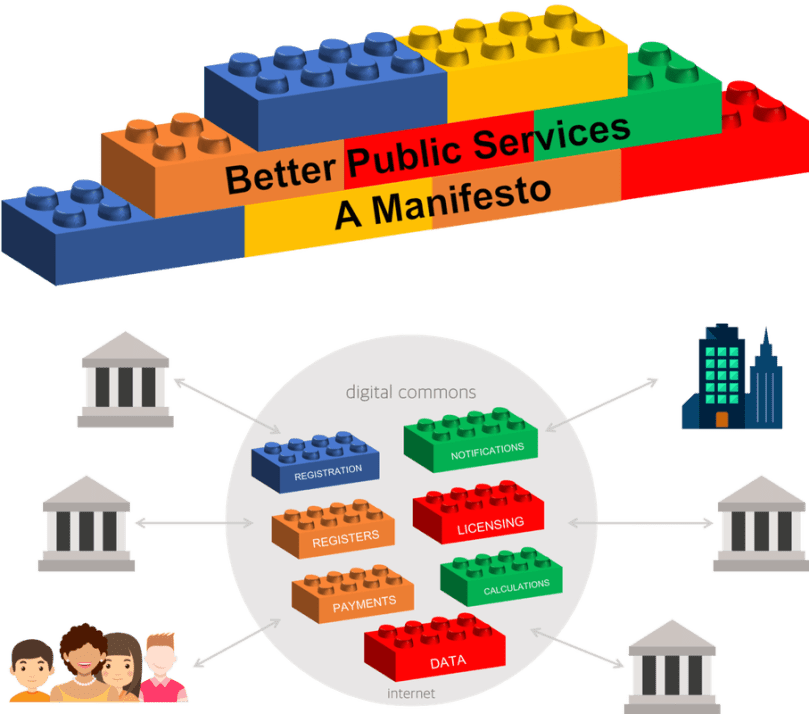
Image (cc) Gary Hatch3112 – with thanks!)

PhD in Rhythms of Information Infrastructure Cultivation: Dr Ayesha Khanna

It was fantastic to see Ayesha Khanna, my PhD student, successfully defend her PhD today. Her work focuses on the temporal nature of information infrastructures within a SmartCity initiative in Berlin identifying the importance of temporal rhythm.

The research will be of interest to practitioners involved in building smart cities, strategic niches for innovation, and for those involved in large digital infrastructure development work.  She faced an excellent viva with Dr Edgar Whitley and Professor Margunn Aanestad examining. 

PhD Thesis Abstract

This thesis investigates the importance of temporal rhythms in the study of information infrastructures (IIs), responding to the call to address an II’s “biography” by focusing on its evolution over time. It enriches understanding of how socially constructed rhythms, a temporal structure under-examined in the II literature, influence II cultivation. A strategic niche project to develop an e-mobility II in Berlin is used as the case study and reveals the influence of rhythm in disciplining (constraining) and modeling (motivating) II cultivation. It demonstrates how the intermediary mediates these influences through the interventions of harmonising, riffing and composing. Based on these interventions, the study develops the concept of facilitated II cultivation, which adds to the literature exploring the tension between planned and emergent infrastructure work. In doing so, the study presents a framework for combining short-term implementation concerns (strategic interventions by the intermediary) with long-term path dependency and evolutionary concerns (influences of past and future temporal rhythms) for IIs.

When her minor corrections are complete I will post a link to the final version of the thesis. 


UK Cloud Awards 2018

I am pleased to be a judge for the UK Cloud awards again this year.  https://www.ukcloudawards.co.uk/

If your company is keen to apply for the awards the closing date for entries is the 23rd February 2018. And hopefully I will then see you for the awards ceremony at County Hall in May!


Academic Conference: “Living with Monsters? Social Implications of Algorithmic Phenomena, Hybrid Agency and the Performativity of Technology” (IFIP 8.2)

Dear All,

I am proud to be on the programme committee for one of my favourite academic conferences IFIP 8.2. The conference will be at San Francisco State University, December 11 & 12, 2018 with Lucy Suchman (Lancaster U.) & Paul Edwards (Stanford U. & U. of Michigan) at Keynotes.  I very much hope to see you there!

Submission Deadline: May 27, 2018

Website: http://2018conf.ifipwg82.org/

Our evolving digital worlds generate both hope and fears. Algorithms, using big data, identify suspicious credit card transactions and predict the spread of epidemics, but they also raise concerns about mass surveillance and systematically perpetuated biases. Social media platforms allow us to stay connected with family and friends, but they also commoditize relationships and produce new forms of sociality. While there is little agreement on the implications of digital technology for contemporary work and social life, there is a growing realization that information technologies are performative (MacKenzie 2006) in that they no longer merely represent the world, but also produce it. And given their growing interdependence, the ability to control any given technology is increasingly limited. Stock market flash crashes, induced by algorithmic trading, are highly visible examples of such algorithmic phenomena (Scott and Orlikowski 2014). Have the things we have made become out-of-control juggernauts? Are we living with monsters?

IFIP WG 8.2 has a distinguished history in shaping research agendas around information technology and organisation. For the 2018 working conference, we call for papers from scholars studying information technology and related practices to reflect on the worlds that we help create through our research, debates, and teaching. The metaphor of monsters is intended to stimulate a rethinking of our orientation by compelling us to consider whether, when and why our creations turn against us, and with what implications.

(Image CC – Kevin Dooley – with thanks!)

Win of £6 million to research Digital Interfacing.

I am pleased to form part of a team, with computer science colleagues at UCL, Imperial and QMUL, who have been awarded a EPSRC programme grant for over £6 million to research the interfacing of digital systems. The overall research programme (titled Interface reasoning for interacting systems (IRIS)) aims to research the correct functioning of digital interfaces from technical, social, managerial and organisational perspectives – with my focus being on these latter three topics. Commercial partners involved in the programme include Amazon Web Services (UK), BT, Facebook (International), and Hewlett Packard.

Better understanding the effective management of interfacing is vital as companies and individuals harness new digital innovations and integrate them digitally within their processes and practices. Many digital innovations including the Internet of Things, SmartCities, Platforms and Artificial Intelligence, involve a myriad of systems owned and operated by a myriad of different companies which become tightly coupled together through their digital interfaces (e.g. though APIs and cloud computing). Yet little is known about how the organisations involved in such innovations define such digital interfaces, how they evolve, and in particular what organisational or management commitments are embedded within them.

The research project will formally start in January 2018, with recruitment for a post-doctoral researcher here the LSE starting shortly afterwards. The project will run until December 2023.

http://gow.epsrc.ac.uk/NGBOViewGrant.aspx?GrantRef=EP/R006865/1 

The text below provides a more academic introduction of the project.

Within the field of management, “interfaces” are of significant interest[1]; defining organisational boundaries which differentiate “insiders” and “outsiders” and providing connections across these boundaries. Interfaces are thus more broadly defined than engineered logical or digital interfaces as traditional conceived. Yet this broader understanding, in which digital interfaces are considered “boundary resources” for organisations (Eaton et al. 2015; Ghazawneh and Henfridsson 2013), is increasingly important since large-scale composite distributed organisations are emerging from the digital interfacing of organisational entities (e.g. through the growth of cloud computing[2] and the use of APIs). Within these organisational arrangements digital interfaces instantiate, represent, uphold and negotiate boundaries and separations. We therefore need to extend academic understanding of the digital interfaces between digital systems, and connect it to the social, economic and managerial boundaries and connections they create for organisations and society.

 1         Research Challenges

There is considerable research interest in boundaries within management and information systems. The internet allowed organisations to transform value-chains by digitally connecting with customers and suppliers; by harnessing cloud provided digital services (Venters and Whitley 2012); and by transforming physical products into digitally connected services (e.g. IoT – Internet of Things) (Porter and Heppelmann 2014). This transforms organisations leading to organisational arrangements whose defining characteristic is their constitution out of complex information technologies stretched across space and time, and defined by interconnections (Monteiro et al. 2014) (e.g. Netflix or Uber). Termed “cloud corporations” (Willcocks et al. 2014) such organisations evolve and change and challenge managerial and organisational assumptions of boundedness, stability, and even stable motivation of boundaries(Monteiro et al. 2014). Yet such boundary resources are poorly understood as are the wider ‘service ecosystem’ they form part of (Barros and Dumas 2006; Fishenden and Thompson 2013). There is a paucity of research on the specifics of the interface within such service ecosystems.

Consider for example Adur and Worthing[3] (a UK local council) harnessing (through Methods Consulting – a programme collaborator) Salesforce.com, Braintree Payments and MATSSoft for their services (Thompson and Venters 2015). Their value-chain leverages this extended digital supply chain such that the council is, to a significant extent, constituted from these services and must continually evolve its business, technology and management in the face of interface evolution of these components. This, it is argued, will instigate “profound changes in the ways that firms organise for innovation in the future”(Yoo et al. 2010). Reasoning about the interfaces by which such “cloud-corporations” emerge is however lacking. While sophisticated mathematical tools exist for systems modelling (Collinson et al. 2012) such tools are poorly adopted in practice. A significant focus then of this programme of work will be to seek to drive innovation in interface reasoning and systems modelling into tools for business leaders to apply in reasoning about the interfaces they are exploiting within their organisations. Further as new technologies emerge (e.g. block-chains and Machine Learning) and become available as services through interfaces so reasoning about the managerial, contractual and organisational challenges, and about the systemic nature of interfaces, is necessary. We will therefore research how computer science understanding of interfaces might be useful in understanding the social, managerial and organisational boundary.

The significance of researching interfaces as “boundary resources” has been recognised (Ghazawneh and Henfridsson 2013; Hanseth and Bygstad 2015; Yoo et al. 2010) particularly in studying software platforms whereby (Eaton et al. 2015) they are negotiated over time. These authors acknowledge we lack a coherent methodological framework for examining such boundaries – the gap we will ultimately address.

2        Scientific Approaches

This research is exploratory drawing on theoretical lenses from information systems, management and sociology as well as computer science. First we will systematically evaluate a range of theories and management ideas and evaluate their appropriateness for researching different forms of interfaces. Two specific theoretical lenses we consider within this exploratory research and application are:

Control and Coordination: Harnessing an interface cedes control for an action to a third party and devises mechanisms for control and defines boundaries. We will therefore seek to understand control and coordination in interfaces, and to devise mechanisms by which managers may better understand how they control or are controlled by interface design. This extends Venters previous work (Whitley et al. 2014) and links to ideas of control whereby interfaces are socially interpreted and significant in driving algorithmic agency and culture. This research will contribute to understanding platforms (de Reuver et al. 2017; Gawer and Cusumano 2002) whereby an interface provider is often dominant (e.g. Apple provides iOS to App developers) in providing boundary conditions for control (Eaton et al. 2015) though their boundary resources (Ghazawneh and Henfridsson 2013). This understanding will, we hope, complement and extend the resource focused modelling of control within distributed systems logic.

Temporality, emergence and evolution: Within commercial settings interfaces regularly change. This project will evaluate the relationships between evolutionary change across multiple interfaces, contexts of use, and organisational goals. Interfaces enable resources to be decoupled and recoupled generating new possibilities and increasing the liquidity of resources within value production. Exploring how interface verification alters resource liquidity may be an important avenue of study, drawing upon service dominant logic (Bardhan et al. 2010) to better understand interface consumption. Exploring how organisations can verify evolving and changing interfaces in a timely manner is an important research question for the wider research programme.

We will seek to explore the inter-organisational architectures which emerge through ecosystems: The prevalence of digital interfaces has allowed a unbundling of enterprise software from vertically integrated technology stacks (Chang and Gurbaxani 2012; Hagel and Singer 1999) towards widely distributed flat architectures spanning multiple global supplier networks (Friedman 2005; Susarla et al. 2010). Tracing and understanding this change in terms of enterprise architecture, and its impact on interfaces is relevant.

2         References

Bardhan, I., Demirkan, H., Kannan, O., and Kauffman, R. 2010. “Special Issue: Information Systems in Services,” Journal of Management Information Systems (26:4), pp. 5-12.

Barros, A. P., and Dumas, M. 2006. “The Rise of Web Service Ecosystems,” IT Professional (8:5), pp. 31-37.

Chang, Y. B., and Gurbaxani, V. 2012. “Information Technology Outsourcing, Knowledge Transfer, and Firm Productivity: An Empirical Analysis,” MIS quarterly (36:4), pp. 1043-1053.

Collinson, M., Monahan, B., and Pym, D. J. 2012. A Discipline of Mathematical Systems Modelling. College Publications.

de Reuver, M., Sorensen, C., and Basole, R. C. 2017. “The Digital Platform,” Journal of Information Technology (Forthcoming).

Eaton, B., Elaluf-Calderwood, S., Sørensen, C., and Yoo, Y. 2015. “Distributed Tuning of Boundary Resources: The Case of Apple’s  Ios Service System,” MIS Quarterly (39:1), pp. 217-243.

Fishenden, J., and Thompson, M. 2013. “Digital Government, Open Architecture, and Innovation: Why Public Sector It Will Never Be the Same Again,” Journal of Public Administration, Research, and Theory (23:4), pp. 977-104.

Friedman, T. 2005. The World Is Flat: A Brief History of the Globalized World in the 21st Century. London: Allen Lane.

Gawer, A., and Cusumano, M. 2002. Platform Leadership. Boston,MA: Harvard Business School Press.

Ghazawneh, A., and Henfridsson, O. 2013. “Balancing Platform Control and External Contribution in Third-Party Development: The Boundary Resources Model,” Information Systems Journal (23:2), pp. 173-192.

Hagel, J., and Singer, M. 1999. “Unbundling the Corporation,” Harvard business review (77), pp. 133-144.

Hanseth, O., and Bygstad, B. 2015. “Flexible Generification: Ict Standardization Strategies and Service Innovation in Health Care,” European Journal of Information Systems (24:6), pp. 654-663.

Monteiro, E., Pollock, N., and Williams, R. 2014. “Innovation in Information Infrastructures: Introduction to the Special Issue,” Journal of the Association for Information Systems (15:4), p. I.

Porter, M., and Heppelmann, J. 2014. “How Smart, Connected Products Are Transforming Competition,” Harvard Business Review).

Susarla, A., Barua, A., and Whinston, A. B. 2010. “Multitask Agency, Modular Architecture, and Task Disaggregation in Saas,” Journal of Management Information Systems (26:4), pp. 87-118.

Thompson, M., and Venters, W. 2015. “The Red Queen Hypothesis: Exploring Dynamic Service Ecosystems,” in: 4th Innovation in Information Infrastructures (III) Workshop, P. Constantinides (ed.). Warwick, UK.

Venters, W., and Whitley, E. 2012. “A Critical Review of Cloud Computing: Researching Desires and Realities,” Journal of Information Technology (27:3), pp. 179-197.

Whitley, E., Willcocks, L., and Venters, W. 2014. “Privacy and Security in the Cloud: A Review of Guidance and Responses,” Journal of Information technology and information management).

Willcocks, L., Venters, W., and Whitley, E. 2014. Moving to the  Cloud Corporation. Basingstoke: Palgrave Macmillan.

Yoo, Y., Henfridsson, O., and Lyytinen, K. 2010. “The New Organizing Logic of Digital Innovation: An Agenda for Information Systems Research,” Information Systems Research (21:4), pp. 724-735.

[1] E.g. The Academy of Management (AoM) conference theme for 2017 is “at the Interface” (premier global academic conference in management) and defines interfaces in these terms.

[2] Willcocks, L., W. Venters and E. Whitley (2014). Moving To The Cloud Corporation. Basingstoke, Palgrave Macmillan.

[3] https://www.publictechnology.net/articles/features/adur-and-worthing%E2%80%99s-journey-%E2%80%98government-platform%E2%80%99


Photo (cc) foto1897 with thanks!

ISChannel – 12th Edition out now

The 12th edition of the IS Channel is out here. This is an annual journal on the social study of information systems which is produced, edited and double-blind reviewed by the students of the Information Systems and Digital Innovation programmes at the LSE, with advice from myself and our editor Marta Stelmaszak.

As a core subject, the journal focuses on the study of ICTs, and the social implications of technological innovation. Research works from other perspectives are considered for publication, provided that they place the discussion on ICTs at the core of analysis and problematisation.

We are already hard at work with the next edition of the journal so if you are a recent graduate from our MSc and would like to develop your Merit or Distinction dissertation into an article please contact us:  Is.Channel@lse.ac.uk

Editorial for this edition by Mame Frimpong (Associate Editor)

From my fellow associate editors and reviewers, it is my pleasure to present the 12th issue of the iSCHANNEL. Congratulations to our writers! To mirror the words of Associate Editor, Marta Stelmaszak, to submit to the journal is a worthy accomplishment and challenge for all who are dedicated to the process. To our readers, thank you for taking the time! We hope that in the next edition, we will be celebrating your work. As a note, we do not impose copyright on articles written so if you wish to develop your article further for other publications that is welcomed rather than discouraged (though a small acknowledgment would be appreciated).

In this edition of the journal,
Simon Draxinger uses Facebook Messenger as a case study to argue that chatbots are the potential outcome(s) of digital platforms’ architectural principles. To strengthen this argument, the paper focuses on the theory of Layered Modular Architecture as proposed Yoo et al. (2010).
Yunjing Joyce Li assesses “Emergency.” This innovative in-vehicle emergency response solution for the upcoming era of fully autonomous vehicles is studied as the example of an intelligent “personal assistant” system. In looking at this innovative emergency response solution, design analysis demonstrated that the interplay between human and digital agents will be determined not by machines but by the choices made by individuals, organizations and societies.
Curtis Goldsby examines a closed free-floating car sharing platform, DriveNow. In his analysis, the author determines that the platform struggles to capitalize on multi-sided network effects. Through analysis, the paper determines that closed platform born through traditional ventures, despite growth bottlenecks, also has the potential to disrupt industries.
Marina Alvarez studies how Vendor Relationship Management (VRM) systems, as tools for marketing and consumption practices, can affect aspects of consumer empowerment. Through recognizing the effects of discourses of knowledge, the paper uses the concepts of “choice” and “power” on narratives of information inequities and disciplining to establish a basis for understanding consumer empowerment through VRM systems for marketing and consumption practices.

As an MSc student myself, I know I am not the only one that found this year to be both intellectually stimulating and challenging. It would be amiss of me not to acknowledge the process the writers have gone through to present their ideas and give us the pleasure of reading them. The iterative process of the journal hoped to continue pushing the writers to think beyond established—and their own—frameworks to develop pieces that truly matter to them. The topics found in this journal represent the various interests of the writers and draws our reviewers to refine their ideas. Special thanks to all the
reviewers, associate editors Joyce Li and Marta Stelmaszak, and our faculty advisor, Will Venters. The journal is an indispensable space and one we all enjoyed working on.

Old Sprint Weeks

Teaching digital innovation at the LSE: Sprint week with Roland Berger

Organisations need to innovate digital products and services faster than ever before. This requires new skills for digital innovation but gaining skills is challenging. Traditional university lectures and classes are excellent at providing the vital theoretical backgrounds; for example in platforms, business strategy, digital infrastructures, systems development approaches, cloud computing and agility, yet they are poorly designed to provide a visceral understanding of how agile teams really innovate. Addressing this challenge we drew inspiration from  Mark Thompson at Judge Business School who has run small sprints within their MBA and we developed a 1-week “Sprint week” bootcamp within our core MSc course.

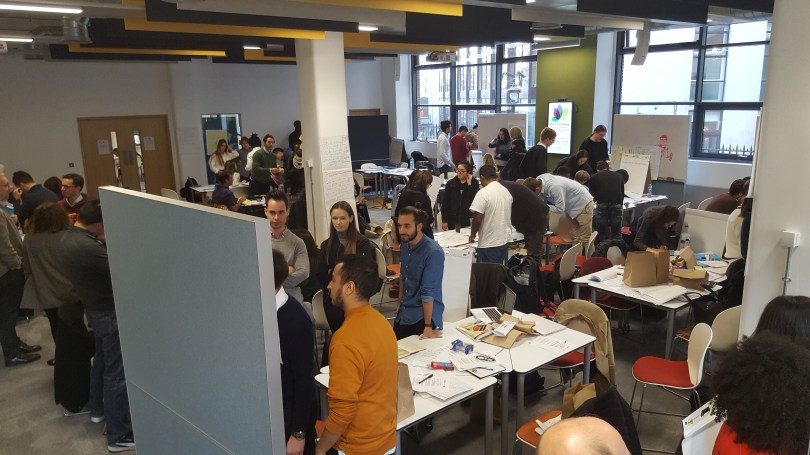
This week all our 120+ MSc students studying “Management, Information Systems and Digital Innovation” are coming together in teams of 6 to innovate a new product or service for a real global company during a 5 day sprint [1]. They are supported by faculty and by consultants from Roland Berger who run similar sprint innovations for blue-chip clients, and by the client’s digital innovation expert.

In essence our week follows the Sprint method set out in Jake Knapp’s book “Sprint: How to solve big problems and test new ideas in just five days” with some significant changes:

  • Students will use richer (and more complex) modelling methodologies, which makes sure groups appreciate the different cultural, social and organisational perspectives within their design. This ensure they produce designs which are both systemically desirable but also “culturally feasible” wherever they will be applied.
  • Students will be pushed to not just produce solutions based on user interface or web design. They must develop a coherent digital design using basic UML modelling techniques alongside Wardley mapping techniques, to ensure a realistic strategic design.
  • Interspersed with the innovation work are a few short lectures – refreshing them on key techniques and introducing challenges their design will face.

On the Friday, the consultants will select the top groups for a Friday afternoon “Dragon’s Den” where experts from the global company, Roland Berger, and from the consulting and software industry, will put those groups through their paces – asking the difficult questions and pointing out the failings in their design. Finally, and most importantly, there is a party on the Friday evening (kindly sponsored by Roland Berger).

As the week counts for 50% of the student’s course mark, their designs will be marked by LSE academics based on LSE assessment criteria – something that is important to ensure this is not a “game” but a deliverable for our students.

Students will benefit from this unique opportunity and will experience some of the frustration, stress and elation of this kind of digital innovation work. Students will also get a chance to show in future job interviews that they know how to work in groups on digital innovation work, for a real client under real pressure.

One group might just come up with the next big thing and then, perhaps, be given a chance to work with the client to develop it further!

Will Venters 2017.

  1. Knapp, J., J. Zeratsky, and B. Kowitz, Sprint: How to solve big problems and test new ideas in just five days. 2016: Simon and Schuster.
  2. Checkland, P., Systems Thinking, Systems Practice. 1981, Chichester: Wiley. 330.
  3. Checkland, P. and J. Poulter, Learning for Action: A short definitive account of Soft Systems Methodology and its use for Practitioners, Teachers and Students. 2006, Chichester, UK: John Wiley and Sons.
  4. Checkland, P. and J. Scholes, Soft Systems Methodology in Action. 1990, Chichester: John Wiley & Sons Ltd.


Naps in the Huawei office – perhaps the secret of China’s digital success?

We have just spent a week visiting Shenzhen, China to see the headquarters of one of the world’s most innovative and fastest growing companies – Huawei. Since its founding in 1987, Huawei has grown to become one of the world’s largest telecom’s companies with revenue of $75Bn[1]. Globally it employs 180,000 with nearly 60,000 of these based at the Shenzhen campus. 768px-Huawei.svg

Our overall aim is to understand their global innovation practices[2]. We want to understand how management and governance arrangements support the demand for concurrently tightly knit, yet open, innovation networks. In particular we are interested in how they harness digital platforms in support of this global innovation practice. Understanding this is particularly important since Chinese firms must successful harness capital and talent beyond their borders (Fuller 2016) and since, given the diversity, scale, and adoption-willingness of the Chinese home market, innovation networks outside China will be attracted to take advantage of the “world’s biggest Petri dish for breeding world-class competition” (Yip and McKern 2016).

So how does Huawei achieve its amazing growth and success?

It was amazing to spend time digging into the practices of this fast-growing successful Chinese technology company. Away from our intense research activity, we became mindful of stark differences between Huawei and other Silicon Valley technology companies we have visited. We noted two things which we thought particularly interesting (acknowledging that many others have provided much more detailed analysis of Huawei’s management practices (e.g. Tao et al. 2016) which we do not aim to repeat or claim to validate).

Firstly, like many others across China, the employees of Huawei take naps at lunchtime[3]. They have lunch in huge canteens[4] then return to their cubicles, roll out camp beds kept hidden under their desks, and go to sleep (with the office lights turned out and blinds drawn). The whole company knows not to call between 1pm and 2pm, and so sleep is uninterrupted. Talking to an expatriate who now works there it is “like taking a shower” – refreshing and revitalising everyone ready for the afternoon. A downside is clearly that it extends the day in the office, though for many this would also allow them to travel outside commuter hours. But it provides a natural pause in the day, with time to reflect, pause and concentrate on afternoons tasks by reducing the mid-afternoon productivity slump. Naps might also be helped by the focus on tea rather than sleep-depriving espressos and flat-whites!

Secondly, alongside naps, was an overall general lack of overt hubris and self-aggrandising. In the USA and Europe tech-companies invest in amazing offices with slides, banners, bright colours, ping-pong tables, foosball tables etc. At Huawei, the offices felt much more like a university of young clever people – the furniture functional but personal with each workstation organised with bags of tea, pot-plants, posters and the roll-beds. Rather than amazing (like Google’s offices) it felt homely, welcoming and personal. Plastic fruit and cheap toys hung from the ceiling as decoration – presumably put up by the employees themselves rather than interior-designers. Chairs were comfortable rather than “designer” and the focus was upon working efficiently rather than “jerking around” or having fun. It felt efficient, focused, and much more like the university campus’ that tech-companies work so hard to try to emulate. Huawei in Shenzhen was clearly a friendly enjoyable place to work – albeit to work very hard.

* Our research is funded by Huawei’s HIRP Open funding programme.

Will Venters and Carsten Sorensen.

Fuller, D.B. 2016. Paper Tigers, Hidden Dragons: Firms and the Political Economy of China’s Technological Development. OUP, Oxford.

Tao, T., D. De Cremer, W. Chunbo. 2016. Huawei: Leadership, Culture, and Connectivity. SAGE Publications India.

Yip, G.S., B. McKern. 2016. China’s Next Strategic Advantage: From Imitation to Innovation. MIT Press, Cambridge, MA.

[1] http://www.huawei.com/en/about-huawei

[2] Our research is funded by Huawei’s HIRP Open funding programme: http://innovationresearch.huawei.com/IPD/hirp/portal/hirp/hirp-open.html

[3] http://www.goabroadchina.com/Why-Chinese-People-Always-Take-a-Noon-Time-Nap_b70#.WcjoC0yZPOY

[4] http://money.cnn.com/2016/05/20/technology/china-tech-huawei-campus-life/index.html


Image (c) Huawei – used with permission and thanks

The real cost of using the cloud – your help needed for research supported by Rackspace and Intel.

It’s almost a given that cloud technology has the power to change the way organisations operate. Cost efficiency, increased business agility and time-saving are just some of the key associated benefits[1]. As cloud technology has matured, it’s likely not enough for businesses to simply have cloud platforms in place as part of their operations. The  optimisation and continual upgrading of the technology may be just as important over the long term. With that in mind, a central research question remains: how can global businesses maximise their use of the cloud? What are the key ingredients they need to maintain, manage and maximise their usage of cloud?

For instance, do enterprises have the technical expertise to roll out the major cloud projects that will reap the significant efficiencies and savings for their business? How can large enterprises ensure they have the right cloud expertise in place to capitalise on innovations in cloud technology and remain competitive? Finally, what are the cost implications of nurturing in-house cloud expertise vs harnessing those of a managed cloud service provider?

A colleague (Carsten Sorensen) and I are working with Rackspace® on a project (which is also sponsored by Intel®) to find out. But we would need some help from IT leaders like you?

How you can help

We’re looking to interview IT decision makers/leaders in some of the UK’s largest enterprises (those with more than 1,000 employees and with a minimum annual turnover of £500m) which use cloud technology in some form, to help guide the insights developed as part of this project.

The interviews will be no more than 30 mins long via telephone. Your participation in the project will also give you early access to the resulting report covering the initial key findings. We would also share subsequent academic articles with you. We follow research ethics guidelines and can ensure anonymity to yourself and your company (feel free to email confidentially to discuss this issue).

If this sounds like something you’d like to get involved in then please email me w.venters@lse.ac.uk

Best wishes,

Dr Will Venters,

Dr Carsten Sorensen,

and Dr Florian Allwein.

  1. Venters, W. and E. Whitley, A Critical Review of Cloud Computing: Researching Desires and Realities. Journal of Information Technology, 2012. 27(3): p. 179-197.

(Photo (cc) Damien Pollet with thanks!)