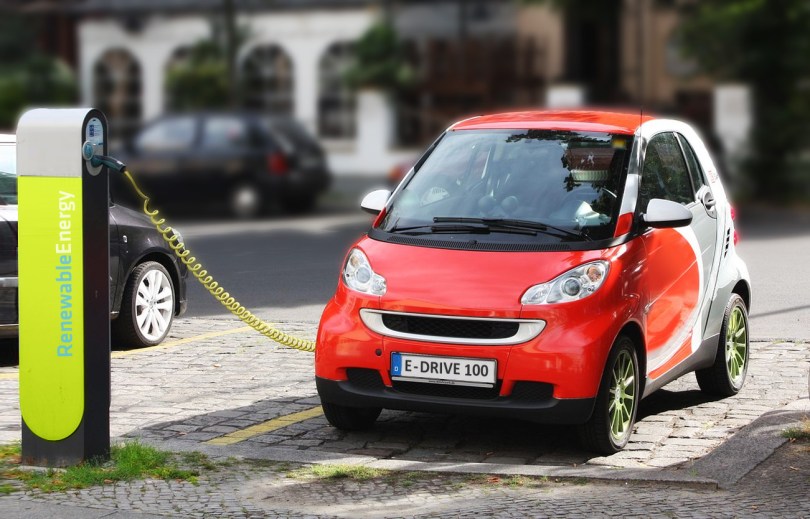
Building Mobility-as-a-Service in Berlin: The rhythms of information infrastructure coordination for smart cities

[The following article was jointly written with my PhD Student Ayesha Khanna. The article was published today on LSE Business Review http://blogs.lse.ac.uk/businessreview/ and is syndicated here with their agreement]

The 21st century has seen a growing recognition of the important of cities in the world: not only does over half of humanity live in cities, but cities contribute 60 per cent of global GDP, consume 75 per cent of the world’s resources and generate 75 per cent of its carbon emissions. There is little doubt that the enlarging footprint of cities, with the rapid rate of urbanization in the developing world, will be where “the battle for sustainability will be won or lost” and, for those engaged in “smart-cities” initiatives, the focus of winning this battle is through the use of digital technology to efficiently manage resources. One of the key sectors for such smart cities initiatives is transportation.

Transportation infrastructures today rely heavily on private car ownership, which is powered by fossil fuels, and public transportation, both of which operate independently of each other. Policy makers believe radical innovation in this sector is needed to move it to a more sustainable system of mobility.

To achieve the goal of sustainable, seamless, and efficient mobility, an infrastructure would be required that would allow residents to move away from private ownership to a combination of car-sharing and public transport. For example, such an intermodal chain of mobility might include taking a rented bicycle to the bus station, a bus to a stop near the office, and then a car-sharing service to the office, covering every step from origin to the last mile. Powered by renewable energy, electric vehicles could make this journey entirely green.

In order to create such a mobility infrastructure, all the services offered (buses, trains, car-sharing systems, charging stations, and payments) would have to be integrated using digital technology in order to provide an urban resident with an easy way to map and take an intermodal journey using her smartphone. This change would transform transportation as we know it today to Mobility-as-a-Service but requires considerable innovation in the various heterogeneous digital computer-based systems (what we might term the information infrastructures), underpinning the physical transportation infrastructure. (For a more detailed account of the ideas of information infrastructure see Hanseth, O. and E. Monteiro, 1998)

Framing an Academic Project

Academic research on how such mobility information infrastructures would grow from the constituent disparate systems that currently exist in silos has been nascent, especially on the topic of the coordination efforts required. Part of the reason is that many required elements of such infrastructures do not currently exist, and that cities are only just beginning to prototype them.

In our research, we use a theory of digital infrastructure coordination as a framework to unravel the forces that influence the development of a mobility focused information infrastructure, extending it to focus particularly on the influence of temporal rhythms within the coordination. Understanding this has important implications for policy makers seeking to better support smart-cities initiatives. Our research took us to Berlin and a project which was prototyping an integrated sustainable mobility system there.

The BeMobility Case Study

The BeMobility project, which lasted from September 2009 to March 2014, was started as part of a concerted effort by the German government to become a market leader and innovator in electric mobility. A public-private partnership between the government and over 30 private and academic sector stakeholders, the goal of BeMobility was to prototype an integrated mobility services infrastructure that would be efficient, sustainable and seamless for Berlin residents. The largest railways operator Deutsche Bahn was chosen as the lead partner of the project, with the think-do tank InnoZ (an institute focused on future mobility research) as the project coordinator and intermediary. Organizations participating in the project ranged from energy providers like Vattenfall to car manufacturers such as Daimler to technical scientists provided by Technical University of Berlin.

The project, despite facing many challenges, was able to prototype a transportation infrastructure which integrated electric car sharing with Berlin’s existing public transport system. In the second phase of the project, it further integrated this infrastructure with a micro-smart power-grid, providing insights into how such mobility services could be powered by renewable energies. While the integration effort was both at the hardware and software levels, our research studied the coordination efforts related to information infrastructure in particular.

“Integration of all this information is what we now call Mobility-as-a-Service. BeMobility was  one of the first projects in the world to attempt to do it.” – Member of BeMobility Project

Findings and Discussion

Our analysis showed that individuals and organizations respond to coordination efforts based on a combination of historical cycles of funding, product development and market structures, and anticipated patterns of technology disruption, innovation plans and consumer behaviour. Peoples’ actions in contributing to an integrated infrastructure are tempered not only by these past and future rhythms, but also by the limits of the technologies they encounter. Some of these limitations are physical in nature, such as the inability to integrate data due to lack of specific computing interfaces, and some are political, such as blocked access to databases due to concerns about competitive espionage and customer privacy.

Our findings also surfaced the power of the intermediary as coordinator. Contrary to the limited perception of a coordinator as a project manager and accountant for a government funded project, we saw InnoZ emerge as a key driver of the information infrastructure integration. One of the most powerful tools for the intermediary was its role in mapping future rhythms of technology development. It achieved this by showcasing prototypes of different types of electric vehicles, charging stations, solar panels, and software systems, at InnoZ’s campus.

This campus itself acted as a mini-prototype where both hardware and software integration could be first implemented and tested. The ability to physically demonstrate how the micro-smart grid could connect with the car-sharing system to enable sustainable energy for electric cars, for example, both surprised and motivated other stakeholders to take the imminent possibility of a sustainable mobility infrastructure more seriously.

Ultimately, business stakeholders were especially concerned about the commercial viability of such radical innovation. Here too the intermediary proactively shaped their thinking by conducting its own extensive social science research on the behavioural patterns of current and future users. For example, by showing that young urban residents were more interested in car-sharing than private ownership of cars, InnoZ made a strong case for why an integrated infrastructure could also be a good business investment.

Implications

As more cities experiment with Mobility-as-a-Service, understanding the influence of rhythms on coordinating information infrastructure is helpful for policymakers. Insights that would be useful to policymakers include:

  • Keeping a budget for building an innovation lab where cutting edge technologies can be tested and integration efforts can be showcased will lead to more engagement with stakeholders.
  • Working more closely with the intermediary to conduct social research on the mobility habits of millennial urban dwellers will incentivise stakeholders as it will prove a market for the smart infrastructure.
  • Anticipating the disciplinary inertia imposed by legacy systems and organizational practices, and countering it by including stakeholders in the working group whose temporal rhythms include innovative product cycles more in line with the goals of the integrated infrastructure.

This study also contributes to the academic literature on information infrastructure development by providing insights on the role of time in coordinating integration efforts. It responds to a gap in the understanding of the evolution of large-scale multi-organizational infrastructures, specifically as they relate to mobility.

♣♣♣

Notes:

Will Venters is an Assistant Professor within the Department of Management at the London School of Economics and Political Sciences. His research focuses on the distributed development of widely distributed computing systems. His recent research has focused on digital infrastructure, cloud computing and knowledge management systems. He has researched various organisations including government-related organisations, the construction industry, telecoms, financial services, health, and the Large Hadron Collider at CERN. He has undertaken consultancy for a wide range of organisations, and has published articles in top journals including the Journal of Management Studies, MIS Quarterly, Information Systems Journal, Journal of Information Technology and Information Technology and People (where he is also an associated editor).  http://www.willventers.com

Ayesha Khanna is a digital technology and product strategy expert advising governments and companies on smart cities, future skills, and fintech. She spent more than a decade on Wall Street advising product innovation teams developing large scale trading, risk management and data analytics systems. Ayesha is CEO of LionLabs, a software engineering and design firm based in Singapore. She has a BA (honors) in Economics from Harvard University, an MS in Operations Research from Columbia University and is completing her PhD on smart city infrastructures at the London School of Economics.

Photo by Mueller felix (CC- thanks)

Join conversation with Eric Schmidt “From LEO to DeepMind: Britain’s computing pioneers”

Join me in attending Eric Schmidt (Executive chairman of Alphabet (Google)) in conversation with my colleague Prof Chrisanthi Avgerou on the 14th October here at the LSE.

(Note getting a ticket will be difficult – see below for applications)

Click for full details : From LEO to DeepMind: Britain’s computing pioneers – 10 – 2016 – Events – Public events – Home

Department of Management and LEO Computers Society public conversation

Date: Friday 14 October 2016
Time:  6.30-7.30pm
Venue: LSE campus, venue TBC to ticketholders
Speaker: Eric Schmidt
Chair: Professor Chrisanthi Avgerou

Five years on from his 2011 MacTaggart lecture in which he traced Britain’s computing heritage and called for the inclusion of computer science (CS) in the National Curriculum, Alphabet executive chairman Eric Schmidt will discuss progress in CS education and digital skills, and the opportunities that flow from the next wave of British computing innovation in machine learning. Join Eric in conversation with Professor Chrisanthi Avgerou.

Eric Schmidt (@ericschmidt) is the executive chairman of Alphabet, responsible for the external matters of all of the holding company’s businesses, including Google Inc., advising their CEOs and leadership on business and policy issues. Eric joined Google in 2001 and helped grow the company from a Silicon Valley startup to a global leader in technology. He served as Google’s Chief Executive Officer from 2001-2011, overseeing the company’s technical and business strategy alongside founders Sergey Brin and Larry Page. Under his leadership Google dramatically scaled its infrastructure and diversified its product offerings while maintaining a strong culture of innovation.

Chrisanthi Avgerou is Professor of Information Systems at LSE’s Department of Management and Programme Director of LSE’s MSc Management, Information Systems and Digital Innovation. She is interested in the relationship of ICT to organisational change and the role of ICT in socio-economic development. She has served in various research and policy committees on information technology and socio-economic development of the International Federation for Information Processing (IFIP) from 1996 until 2012.

The Department of Management (@LSEManagement) is a globally diverse academic community at the heart of the LSE, taking a unique interdisciplinary, academically in-depth approach to the study of management and organisations.

In 1951 J Lyons and Co, an innovative British catering company famous for its teashops, ran the first practical business application and pioneered the world’s first business computer. In subsequent years, LEO (Lyons Electronic Office) computers were adopted by a host of blue chip companies at home and abroad. Today, the LEO Computer Society consists of former employers of LEO Computers and its succeeding companies, men and women who have worked with an LEO computer, and anyone who has an interest in the history of the company.

Twitter Hashtag for this event: #LSEcomputer

Ticket Information

This event is free and open to all however a ticket is required, only one ticket per person can be requested.

LSE students and staff are able to collect one ticket per person from the SU shop, located on Lincolns Chambers, 2-4 Portsmouth Street from 10am on Thursday 6 October. These tickets are available on a first come, first serve basis.

Members of the public, LSE alumni, LSE students and LSE staff can request one ticket via the online ticket request form which will be live on this listing from around 6pm on Thursday 6 October until at least 12noon on Friday 7 October. If at 12noon we have received more requests than there are tickets available, the line will be closed, and tickets will be allocated on a random basis to those requests received. If we have received fewer requests than tickets available, the ticket line will stay open until all tickets have been allocated.


Artificial intelligence is hard to see – Medium

A great article discussing the impact of AI on society and the risks involved in the context of the debate on Nick Ut’s Pulitzer-prize winning picture being censored by Facebook’s AI systems. 

Why we urgently need to measure AI’s societal impacts

Click Here: Artificial intelligence is hard to see – Medium

Hype, Blockchain – and some Inconvenient Truths

Excellent piece on the problems of Blockchain for identity management from Jerry Fishenden… 

“For all the froth and hype about blockchain, you’d think it was going to bring about world peace, and simultaneously solve every problem known to mankind. There’s probably been more tosh written about it over the past year or so than all that previous guff about “big data”. Quite frankly, I’m disappointed blockchain hasn’t defeated ISIL single-handed and rebuilt the Seven Wonders of the Ancient World by now. Come on blockchain, what are you waiting for?!” (Click the link below to read on..)

Source: Hype, Blockchain – and some Inconvenient Truths

What can Artificial Intelligence do for business?

I am joining a panel tomorrow at the AI-Summit in London, focused on practical Artificial Intelligence (AI) for business applications. I am to be asked the question “What can Artificial Intelligence do for business?”, so by way of preparation I thought I should try to answer the question on my blog.

Perhaps we can break the question down – first considering the corollary question of “what can’t AI do for business” even if its cognitive potential matches or exceeds that of a human, then discussing “what can AI do for businesses practically today”.

What would happen if we did succeed in developing AI which has significant cognitive potential (as IBM’s Watson provides a foretaste of)?  Let’s undertake a thought experiment. Imagine that we have AI software (Fred) which is capable of matching or exceeding human level intelligence (cognitively defined), but obviously remains locked inside a prison of its computer body.  What would Fred miss that might limit his ability to help the business?

Firstly much of business is about social relationships – those attending the AI-Summit have decided that something is available which is not as effective via reading the Internet – perhaps it is the herd mentality of seeing what others are doing, perhaps it is the subtle clues, perhaps the serendipitous conversations, or perhaps it is about building trust such that unwritten knowledge is shared. Fred would likely be absent from this – even if he were given a robotic persona it is unlikely it would fit in with the subtle social activity needed to navigate the drinks reception.

Second Fred is necessarily backward looking, gleaning his intelligence and predictive capacity from processing the vast informational traces of human existence available from the past (or present). Yet we humans, and business in general, is forward looking – we live by imagined futures as much as remembered pasts. How well Fred could handle that prediction when the world can change in an instant (remember the sad day of 9/11)? Perhaps quicker than us (processing the immediate tweets) but perhaps wrongly – not seeing the mood shifts, changes and immediate actions. Who knows?

My third point is derived from the famous hawthorn experiments which showed that humans’ behaviour changes when we are observed. Embedding Fred into an organisation will change the organisation’s social dynamic and so change the organisation. Perhaps people will stop talking where Fred can hear, or talk differently when they know he is watching.  Perhaps they will be most risk averse – worried Fred would question the rationality of their decisions. Perhaps they would be more scientific – seeking to mimic Fred – and lose their aesthetic intuitive ideas? Perhaps they will find it hard to challenge, debate and argue with Fred –debate that is necessary for businesses to arrive at decisions in the face of uncertainty? Or perhaps Fred will deny the wisdom of the crowd (Surowiecki, 2005) by over representing one perspective, when the crowd may better reflect human’s likely future response?

Or perhaps, as Nicholas Carr suggests (Carr, 2014) they will prove so useful and intelligent that they dull our interest in the business, erode our attentiveness and deskill the CxOs in the organisation – just as it has been suggested flying on Autopilot can do for pilots.

Finally, (and arguably most importantly as those who believe in AI and will likely dismiss the earlier pronouncements as simplistic as AI will overcome these by brute force of intelligence), Fred’s intelligence would be based on data gleaned from a human world and “raw data is an oxymoron, data are always already cooked and never entirely raw” (Gitelman andJackson 2013 following Bowker 2005 – cited in (Kitchin, 2014)). Fred’s data is partial and decisions were made as to what was, and wasn’t counted, recorded, and how it was recorded (Bowker & Star, 1999). Our data reflects our social world and Fred is likely to over-estimate the benign nature of this representation (or extreme representations) of the data. While IBM’s Watson can reflect human knowledge in games such as Jeopardy, its limited ability to question the provenance of data without real human experience may limit its ability to act humanly – and in a world which continues to be dominate by humans this may be a problem. I had the pleasure of attending a talk two weeks ago by Prof Ross Koppel who discusses this challenge in detail in relation to health-care payments data.  AI is founded upon an ontology of scientific rationality – by far the most dominant ontological position today. This idea argues that science, and statistical inference from data, presents the truth (a single unassailable truth at that). Such rationality denies human belief, superstition, irrationality – yet these continue to play a part in the way humans act and behave. Perhaps AI needs to explore further these philosophical assumptions as Winograd and Flores famously did around AI three decades ago (Winograd & Flores, 1986).

Finally we should try, when evaluating any new technologies impact on business to be critical of “solutionism” which argues that business problems will be solved by one silver bullet. Instead we should evaluate each through a range of relevant filters – asking questions about their likely economic, social and political distortions and from this evaluate how they can truly add value to business.   In exploiting AI today, at its most basic, businesses should start by focusing on the low-hanging fruit.  AI doesn’t have to be that intelligent to provide huge benefits.  Consider how Robotic Process Automation  can help companies (e.g. O2) deal with its long tail of boring repetitive processes (Willcocks & Lacity, 2016). For example “swivel chair” functions where people extract data from one system (e.g. email) undertake simple processes using rules, then enter the output into a system of record such as ERP (Willcocks & Lacity, 2016). As such processes involve only a modicum of intelligence, and are repetitive and boring for humans, they offer cost opportunities (see Blue Prism as an example of this type of solution) – particularly as one estimate suggests such automation costs around $7500/PA(FTE) compared to $23k PA for an offshore salary (Willcocks and Lacity 2016 quoting  Operationalagility.com).

Obviously AI might move up the chain to deal with more significant business process issues – however at each stage we are reminded that CxOs will need leadership, and IT departments will need specific skills to ensure that the AI makes sensible decisions, and reflects business practices. Business Analysts will need to learn about AI such that they can act as sensible teachers – identifying risks that AI are unlikely to notice, and steering the AI to act sensibly.  Finally as the technology improves so organisational and business sociologists will be needed to wrestle with the challenges identified above.

© Will Venters

Bowker, G., & Star, S. L. (1999). Sorting Things Out:Classification and Its Consequences. Cambridge,MA: MIT Press.

Carr, N. (2014). The Glass Cage: Automation and Us: WW Norton & Company.

Kitchin, R. (2014). The data revolution: Big data, open data, data infrastructures and their consequences: Sage.

Surowiecki, J. (2005). The wisdom of crowds: Anchor.

Willcocks, L., & Lacity, M. C. (2016). Service Automation: Robots and the future of work. Warwickshire, UK: Steve Brookes Publishing.

Winograd, T., & Flores, F. (1986). Understanding computers and cognition. Norwood,NJ: Ablex.

(Image (cc) from Jorge Barba – thanks)
(cc) Kevin Dooley

Evolving your business alongside cloud services – V3 writeup of my talk at Cloud Expo Yesterday

I gave a talk at Cloud Expo at the London Excel centre yesterday on the need for a much more dynamic perspective towards cloud computing. V3.co.uk have written an article providing an excellent summary of the talk if you are interested:
http://www.v3.co.uk/v3-uk/news/2454551/enterprises-must-be-ready-to-evolve-alongside-cloud-services

Dr Will Venters, assistant professor of information systems at the London School of Economics, explained that companies integrating cloud services into their IT infrastructure need to establish fluid partnerships with multiple vendors, as opposed to purchasing a static product….

The Epic Story of Dropbox’s Exodus From the Amazon Cloud Empire | WIRED

Prof. Alan Brown of CoDE shared the following Wired article with me. The article discusses why platforms are a complex value-evaluation activity, and why companies seek to control the ecosystem upon which they rely. “In fleeing the cloud, Dropbox is showing why the cloud is so powerful. It too is building infrastructure so that others don’t have to.”

Half-a-billion people stored files on Dropbox. Well, sort of. Really, the files were in Amazon’s cloud. Until Dropbox built its own. And threw the switch.

Visit: The Epic Story of Dropbox’s Exodus From the Amazon Cloud Empire | WIRED

Platforms for the Internet of Things: Opportunities and Risks

I was chairing a panel at the Internet of Things Expo in London today. One of the points for discussion was the rise of platforms related to the internet of things. As, by some estimates, the number of connected devices is predicted to exceed 50bn by 2020 so there is considerable desire to control the internet based platforms upon which these devices will rely. Before we think specifically about platforms for the Internet of Things it is worth pausing to think about platforms in general.

The idea of platforms is pretty simple – they are something flat we can build upon. In computing terms they are an evolving system of software which provides generativity [1]: the potential to innovate by capitalising on the features of the platform service to provide something more than the sum of its parts. They exhibit the economic concept of network effects [2] – that is their value increases as the number of users increases. The telephone, for example, was useless when only one person had one, but as the number of users increased so its value increased (owners could call more people). This in turn leads to lock-in effects and potential monopolisation: once a standard emerged there was considerable disincentive for existing users to switch, and, faced with competing standards, users will wisely choose a widely adopted incumbent standard (unless the new standard is considerably better or there is other incentives to switch). These network effects also influence suppliers – App developers focus on developing for the standard Android/iPhone platforms so increasing their value and creating a complex ecosystem of value.

Let’s now move to think further about this concept for the Internet of Things.  I worry somewhat about the emergence of strong commercial platforms for Internet of Things devices. IoT concerns things, whose value is derived from both their materiality and their internet-capability. When we purchase an “IoT” enabled street-light (for example) we are making a significant investment in the material streetlight as well as its Internetness. If IoT evolves like mobile phones this could lock us into the platform, and changing to an alternative platform would thus include high material cost (assuming , like mobiles, we are unable to alter software) as, unlike phones these devices are not regularly upgraded. This demonstrates platforms concern the distribution of control, and the platform provider has a strong incentive to seek to control the owners of the devices, and though this derive value from their platform over the long term. Also for many IoT devices (and particularly relevant for critical national infrastructure) this distribution of control does not correspond to distribution of risk, security and liability which many be significant for IoT devices.

There is also considerable incentive for platform creators to innovate their platform – developing new features and options to increase their value and so increase the scale and scope of their platform. This however creates potential instability in the platform – making evaluation of risk, security and liability over the long term exceedingly difficult. Further there is an incentive on platform owners to demand evolution from platform users (to drive greater value) potentially making older devices quickly redundant.

For important IoT devices (such as those used by government bodies), we might suggest that they seek to avoid these effects by harnessing open platforms based on collectively shared standards rather than singular controlled software platforms.  Open platforms are “freely available, standard definitions of service outcomes, processes, or technology that encourage multiple users to converge on utility consumption of services based on definitions – which in turn encourage suppliers to innovate around these commodities.”[3, 4]. In contrast to Open Source, Open platforms are not about the software – but about a collective standards agreement process in which standards are freely shared allowing the collective innovation around that standard. For example the 230v power-supply is a standard around which electricity generators, device manufacturers and consumers coalesce.

What are the lessons here?

(1) Wherever possible we should seek open platforms and promote the development of standards.

(2)  We must demand democratic accountability, and seek to exploit levers which ensure control over our infrastructure is reflective of need.

(3) We should seek to understand platforms as dynamic, evolving self-organising infrastructures not as static entities

References

  1. Zittrain, J.L., The Generative Internet. Harvard Law Review, 2006. 119(7): p. 1974-2040.
  2. Gawer, A. and M. Cusumano, Platform Leadership. 2002, Boston,MA: Harvard Business School Press.
  3. Brown, A., J. Fishenden, and M. Thompson, Digitizing Government. 2015.
  4. Fishenden, J. and M. Thompson, Digital Government, Open Architecture, and Innovation: Why Public Sector IT Will Never Be The Same Again. Journal of Public Administration, Research, and Theory, 2013.

What is Fog Computing?

I read an interesting article on Fog Computing and thought readers might like a short precis:

Applications such as health-monitoring or emergency response require near-instantaneous response such that the delay caused by contacting and receiving data from a cloud data-centre can be highly problematic. Fog Computing is a response to this challenge. The basic idea is to shift some of the computing from the data-centre to devices which are closer to the edge of the network – so moving the cloud to the ground (hence “fog computing”). The computing work is shared between the data-centre and various local IoT devices (e.g. a local router or smart-gateway).

“Fog computing is a paradigm for managing a highly distributed and possibly virtualized environment that provides compute and network services between sensors and cloud data-centers” (Dastjerdi et al. 2016)

While cloud computing (using large data-centres) is perfect for analysis of Big Data “at rest” (i.e.  analysing historical trends where large magnitudes of data are required and cheap processing necessary) fog computing may be much better for dynamic analysis of “data-in-motion” (data concerning immediate ongoing actions which require rapid analytical response).  For example an Augmented Reality Application cannot wait for a distant data-centre to respond when a user’s head it turned. Similarly safety-critical and business-critical applications such as health-care remote monitoring, or remote diagnostics cannot rely on permanent availability of internet connections (as those in York know when floods knocked out their internet for days this year).

Privacy concerns are also relevant. By moving data-analysis to the edge of the network (e.g. a device or local mobile phone) which is often owned by, and controlled by, the data-source the user may have more control over their data. For example an exercise tracker might aggregate and process its GPS data and fitness data on a local mobile phone rather than automatically uploading it to a distant server. It might also undertake data-trimming so reducing the bandwidth and load on the cloud. This is particularly relevant as the number of connected devices increases to billions. This gain should be balanced with the challenge of managing an increasing number of devices which must be secured to hold sensitive data safely.

Another challenge is the climatic damage this new architecture poses. While data-centres are increasingly efficient in their processing, and often rely on clean-energy sources, moving computing to less efficient devices at the edge of the network might create a problem. We are effectively balancing latency with CO2 production.

For more information on see:

Dastjerdi, A. V., Gupta, H., Calheiros, R. N., Ghosh, S. K., and Buyya, R. 2016. “Fog Computing: Principles, Architectures, and Applications,” in Internet of Things: Principles and Paradigm. Elsevier / MKP. http://www.buyya.com/papers/FogComputing2016.pdf

(Image Ian Furst (cc))

Rise of the Platform Enterprise

It was great to be at the Shard earlier this week to hear Peter Evans and Annabelle Gawer talk about their new report “The Rise of the Platform Enterprise”.

The overarching theme of the morning was (albeit not explicitly stated in the programme) “European Platform Anxiety” – that is, that the digital infrastructure central to our economic commerce will become increasingly dominated by a handful of American internet companies.  While China is proving capable of competing (e.g Alibaba, Baidu, Tencent etc.) Europe and Africa/L.America are far behind. This is shown in a stark graph which shows that while N.America platform companies are worth around $3Tn, and Asia’s around $1Tn, Europe’s are only worth about $0.2Tn.

Whether Europe can or should respond was debated. This led to questions such as:

  1. Lack of transparency?
  2. Liability for content on Platforms?
  3. Enforcement of existing legislation within this digital space?
  4. Legal uncertainties and trust,
  5. Possibilities to aid switching between platforms (avoiding lock-in)

Each of these looks like a great MSc dissertation project or PhD research project opportunity.

Anyway I urge you to look at the report, and I thank Prof Alan Brown of CoDE @ Surrey University for the kind invitation to attend the event.